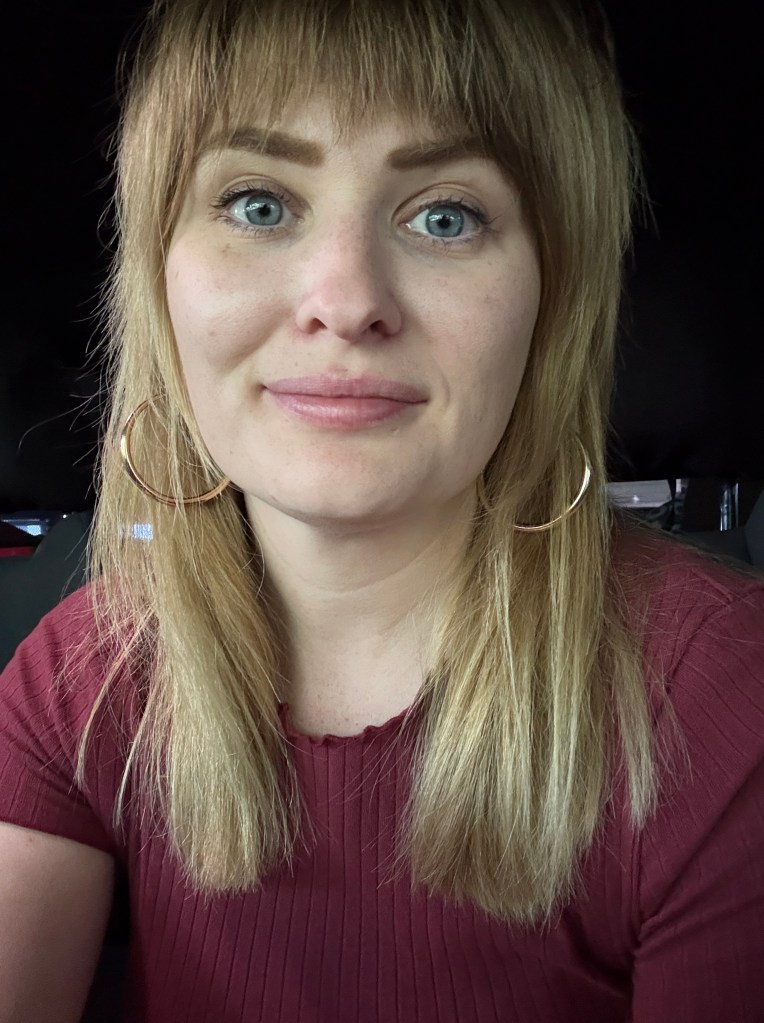
Dr. Megan Fry
Dr. Megan Fry, Phd, RPA is a bioarchaeologist and Registered Professional Archaeologist whose research focuses on diet and mobility of past people through the analysis of human skeletal remains, mortuary traditions and isotopes. She is passionate about the ethical stewardship, repatriation and disposition of human remains under NAGPRA.
Dr. Fry currently serves as NAGPRA Coordinator and Bioarchaeologist for the Department of Anthropology at the University of Cincinnati and is also Visiting Assistant Professor where she teaches diverse courses on topics such as human osteology, NAGPRA repatriation, biological anthropology, and mortuary archaeology. This this role she works on consultation, documentation, and repatriation initiatives under the Native American Graves Protection and Repatriation Act (NAGPRA) for the universities collections. Dr. Fry was the NAGPRA Coordinator and Bioarchaeologist for the Florida Museum of Natural History where she cared for more than 3,000 Ancestors. During her tenure, she worked with Tribal Nations to make almost 2,000 of those Ancestors available for repatriation under 43 CRF part 10. She also previously worked with the Cincinnati Museum Center, assisting with their NAGPRA repatriation efforts.
Dr. Fry has extensive experience in a variety of fieldwork and recovery, including supervising field schools with the University of Sheffield, disaster management with Blakes Emergency Services and FEMORS (University of Florida), CRM with Ardurra Engineering, and forensic protocols with the C.A. Pound Human Identification Lab. She has worked with many museum collections in the U.S. and the U.K., namely the North Lincolnshire Museum, the Collection of Lincoln, in the United Kingdom. A National Science Foundation Graduate Research Fellow, Dr. Fry has published and presented widely on bioarchaeology, digital archaeological methods, and community-centered heritage preservation. Her work reflects a commitment to responsible archaeological practice and the respectful return of Ancestors to descendant communities.
Her research integrates osteological analysis, stable isotope methods, and landscape archaeology to investigate identity, mobility, and social differentiation in past populations. She is particularly interested in how archaeology can be used as a form of community engagement, heritage conservation, and restorative justice. Megan’s research spans diverse contexts—from early medieval Europe to African American heritage sites in the United States—and emphasizes collaborative and engaged approaches to archaeology that connect scientific analysis with descendant communities.
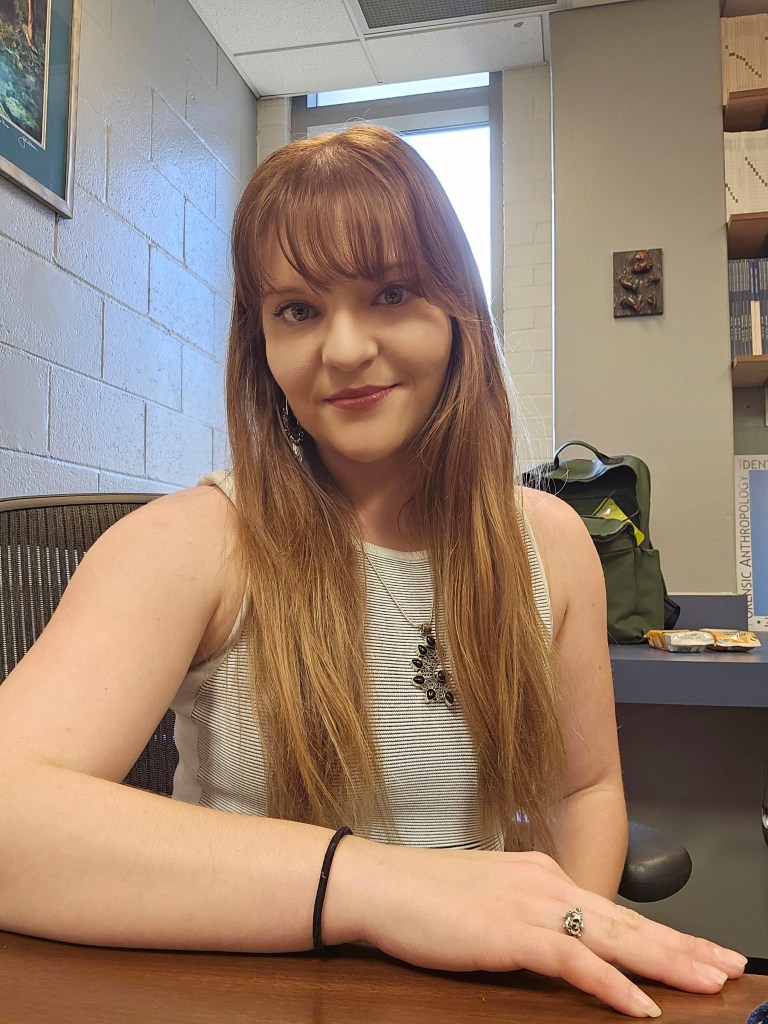
Dr. Samantha McCrane
Dr. Samantha McCrane, Phd, RPA is a Clinical Professor of Forensic Anthropology at the University of West Florida, with a concurrent appointment as a Forensic Anthropologist in the District 1 Medical Examiner’s Office of Florida.
Dr. McCrane is a broadly trained biological anthropologist with dual specializations in forensic and genetic anthropology. Her research interests include human identification and trauma analysis, touch DNA, ethics, human variation, cognitive bias, taphonomy, pXRF, and machine learning.
In addition to her work in academia, Dr. McCrane has diverse applied experience in forensic and bioarchaeological contexts. Dr. McCrane frequently works with medicolegal entities, including medical examiners, law enforcement, death investigators, fire investigators, and ASPCA animal cruelty investigators. She has consulted on forensic casework in Florida, New Hampshire, Maine, Colorado, Georgia, New York, and Louisiana, has first-authored over 45 forensic anthropology case reports and peer-reviewed 20+ others, and has directed approximately two dozen field recoveries. Samantha has also assisted with several prominent bioarchaeological excavations, including the Tulsa Race Massacre excavation in Tulsa, Oklahoma (2021), the Sisters of Loretto exhumation and relocation in Denver, Colorado (2022), and the Penhallow House excavation at the Strawbery Banke Museum in Portsmouth, New Hampshire (2016). She is also currently working on a historic preservation and community engagement project of Newnansville Cemetery, a historic African American cemetery in Alachua, Florida.
In 2024, Dr. McCrane also co-authored a four-field Anthropology-themed children’s alphabet book (2024 McCrane SM and Fry MH. A is for Anthropology. https://a.co/d/1kUAx0g), inspired by her own young son, Cassian.
 Restorative Heritage Consultants